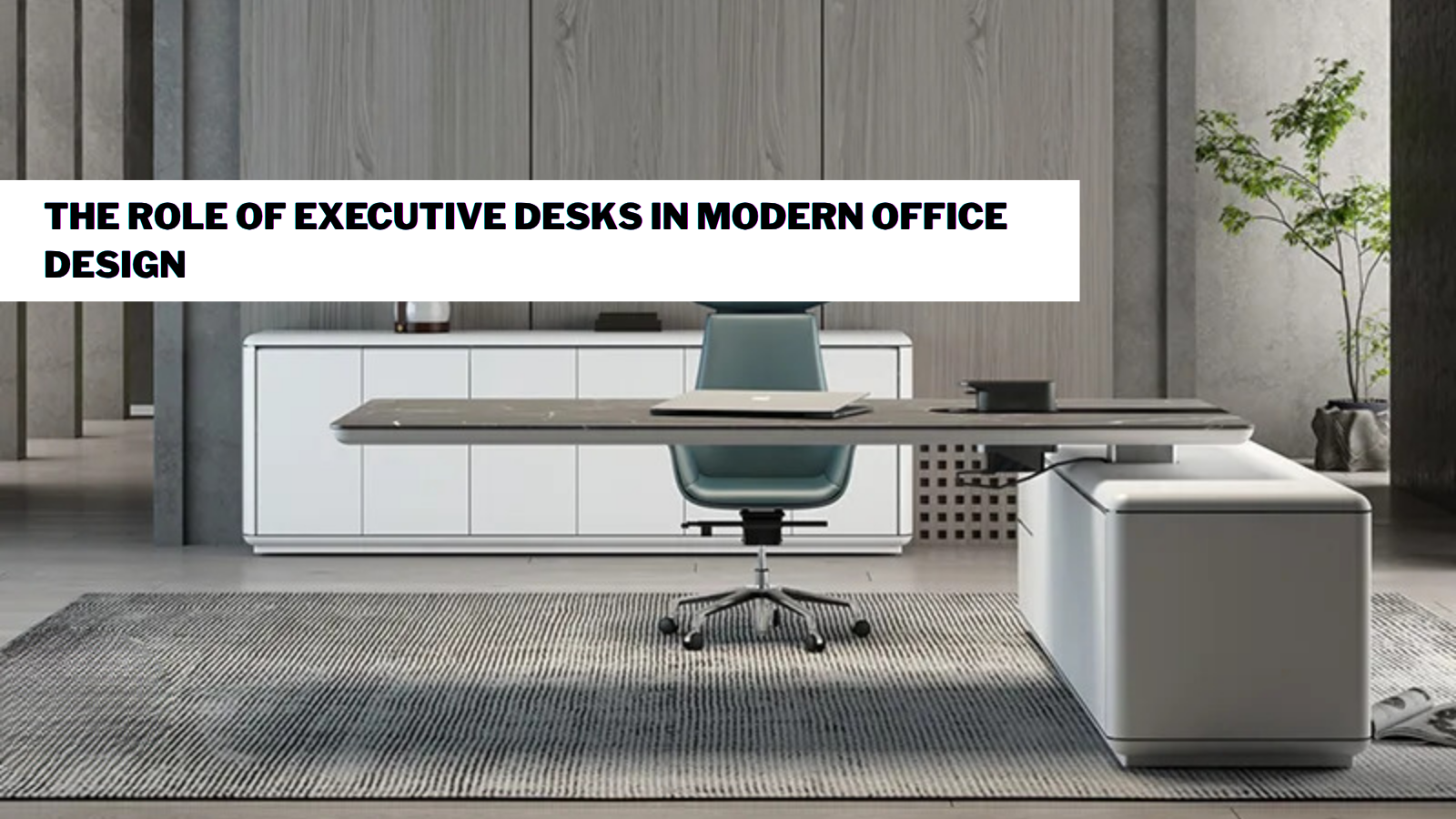
Executive desks have long been associated with private offices, senior positions, and a strong sense of professionalism. But in today’s workplace, their role goes beyond making an office look formal or impressive. An executive desk can influence how a private office is organized, how efficiently its user works, and how the space communicates a company’s identity.
As office design continues to evolve, executive desks are also changing. They can be traditional or minimalist, expansive or space-conscious, and highly formal or surprisingly modern. What remains consistent is their ability to bring together workspace, organization, and visual presence in one central piece of furniture.
From Status Symbol to a Functional Leadership Workspace
Historically, executive desks were closely tied to authority and status. A large private office, substantial desk, and formal furniture arrangement could communicate an individual’s position within an organization. The desk was therefore not simply a place to work; it was also part of the visual language of leadership.
Now the role has not disappeared, but it has become less straightforward. It still contributes to the character of a leadership office, but it is increasingly expected to support the practical realities of everyday work.
Modern workplaces tend to place greater emphasis on flexibility, efficiency, and employee experience, but this shift does not mean that every modern executive desk should look minimal or informal. The key difference is that the desk’s symbolic role now works alongside its functional purpose.
In other words, the executive desk has evolved from being primarily a status marker into a more balanced element of a leadership workspace. It needs to look appropriate for the setting, but it also needs to work well for the person using it.
The Executive Desk as the Anchor of a Private Office
In a private office, the executive desk often becomes the visual and functional anchor of the room. Usually it helps determine how the rest of the space is organized. Storage, seating, lighting, and other supporting furniture are often positioned in relation to the desk.
Its size and proportions can also influence how the room feels. A substantial desk can give a large office a sense of balance and presence, while an oversized desk in a compact room may make the space feel crowded. This is why choosing an executive desk is not simply a matter of selecting the largest available work surface. The desk needs to relate to the dimensions and layout of the entire office.
Design, Materials, and Professional Identity
Because an executive desk occupies a prominent position, its design can strongly influence the character of the office. Traditional wood finishes may create a more established and formal atmosphere, while glass, metal, and minimalist forms can produce a lighter contemporary look.

Material choices also affect more than appearance. The construction and finish influence durability, maintenance, tactile quality, and the overall impression of the furniture. For an executive office, these details matter because the desk is typically one of the most visible and frequently used pieces in the room.
Supporting Efficient Work
An executive desk also needs to accommodate the actual demands of the work being performed. A generous surface can provide room for multiple monitors, documents, writing, and other daily tasks without forcing everything into a limited area.
For users who spend long periods at their desks, practical considerations such as cable management, comfortable working height, legroom, and an organized surface can have a direct effect on efficiency. The goal is not simply to have more space, but to have enough usable space for the way the individual works.
How Executive Desks Connect with Storage and Supporting Furniture
In many private offices, the usefulness of executive desks depends partly on how well it works with the furniture around it.
Storage is a good example. A credenza, pedestal, filing cabinet, or other storage unit can keep frequently used documents and equipment close at hand without filling the desktop with clutter. When these pieces are planned together, the office can provide both an expansive primary workspace and practical organization.
This relationship is particularly important in larger executive offices. Instead of treating every piece of furniture as a separate purchase, the space can be designed as a coordinated system. The desk establishes the main workstation, while supporting furniture extends its storage capacity and helps define functional zones.
The same principle applies to seating. Guest chairs, lounge seating, or other supporting pieces need to fit the desk and the room rather than compete with them. A well-coordinated office feels intentional because the different pieces share compatible proportions, materials, and design language.
For this reason, selecting an executive desk should often be considered as part of a broader office planning decision rather than a standalone furniture choice.
Executive Desk Types
There is no single design that defines an executive desk. Different shapes and materials can serve different workplace needs and design preferences.
- Traditional Wood Executive Desks
Traditional wood executive desks remain popular for offices that favor a formal and established appearance. Wood finishes can create visual warmth while giving the desk a substantial presence. Depending on the design, they can work particularly well in law firms, corporate offices, professional service environments, and other spaces where a more classic aesthetic is appropriate.

Source: https://www.pinterest.com/
- Modern Glass and Metal Executive Desks
Glass and metal introduce a more contemporary visual language. These desks often have cleaner lines and a lighter appearance, making them suitable for modern offices that favor minimalist interiors. Rather than emphasizing formality through heavy construction, they can create a polished look through simplicity and material contrast.

- L-Shaped Corner Desks
L-shaped executive desks are useful when a user needs distinct work zones within one workstation. One side can accommodate computers and everyday tasks, while the other can provide additional space for paperwork, equipment, or organization. Their shape can also make effective use of office corners.

- U-Shaped Executive Desks
U-shaped executive desks provide an even larger working environment by combining multiple surfaces around the user. They can be useful for users with extensive storage, equipment, and workspace requirements. However, their larger footprint means that room dimensions need to be considered carefully before choosing this configuration.

Source: https://www.pinterest.com/
- Standing Executive Desks
Standing executive desks bring sit-stand functionality into a more substantial executive workspace. They are particularly relevant for professionals who want the flexibility to change working positions throughout the day without giving up a larger or more formal desk setup.

These categories should not be viewed as rigid definitions. An executive desk can combine different characteristics, and the most suitable option depends on the user’s work habits, available space, and preferred office style.
What Makes an Executive Desk Worth the Investment?
An executive desk is often a larger investment than a basic office desk, so the question is not simply whether it looks impressive. Its value depends on how well it supports the workspace over time.
One factor is long-term usability. A desk that provides sufficient workspace, sensible organization, and a comfortable working setup is more likely to remain useful as daily requirements change. A well-chosen executive desk should support current needs without becoming unnecessarily restrictive.
Construction quality also matters. Materials, joinery, hardware, surface durability, and overall stability can influence how well a desk performs after years of regular use. A visually attractive desk that deteriorates quickly may offer less value than a simpler design with better construction.
There is also the question of fit. The most expensive or largest desk is not automatically the best choice. A desk that is properly scaled to the office and matched to the user’s workflow can make better use of the available space and contribute to a more efficient environment.
Finally, an executive desk can justify its cost through its broader role in the office. Because it often serves as a focal point, its design can contribute to the professional image of the space while also supporting the practical demands of the person using it.
For these reasons, the value of an executive desk comes from the combination of durability, usability, appropriate scale, and design—not from size or price alone.
Conclusion
The role of executive desks in modern office design is multifunctional. They can establish the center of a private office, support demanding daily work, connect with storage and other furniture, and contribute to the identity of the space.
Whether the choice is a traditional wood desk, a modern glass-and-metal design, an L-shaped configuration, a U-shaped workstation, or a standing executive desk, the right option is ultimately the one that balances workspace needs with the character of the office.
FAQ
How do modern executive desks differ from traditional ones?
Modern desks favor sleeker designs, clean lines, and materials like glass, metal, and engineered wood, with built-in cable management, wireless charging, and USB ports. Traditional desks tend toward ornate detail, solid-wood construction, and darker finishes, often bulkier with decorative legs or inlays.
What high-end materials are used in luxury executive desks?
Premium solid woods like mahogany, walnut, and cherry; high-end metals such as brushed stainless steel, brass, and bronze for accents and legs; and, on the most luxurious pieces, natural stone tops, leather inlays, or tempered glass.
Can a standing desk improve ergonomics and productivity?
Yes. Alternating between sitting and standing helps reduce back strain and improve posture, and many people find changing positions keeps them more alert. Programmable height settings make it easy to return to your ideal sitting and standing heights.
How does an executive desk differ from a secretary desk?Executive desks are larger and more substantial, with expansive surfaces and more storage, designed to anchor a room. Secretary desks are compact, often with a fold-down writing surface and small cubbies for light administrative work.
How do I choose the color and finish?
Complement your existing decor rather than clash with it. Lighter finishes like maple or ash feel airy and suit smaller rooms; darker woods like espresso or ebony project a traditional, authoritative presence but can overwhelm a small space. Matte and textured finishes hide fingerprints and scratches better than high gloss.


