
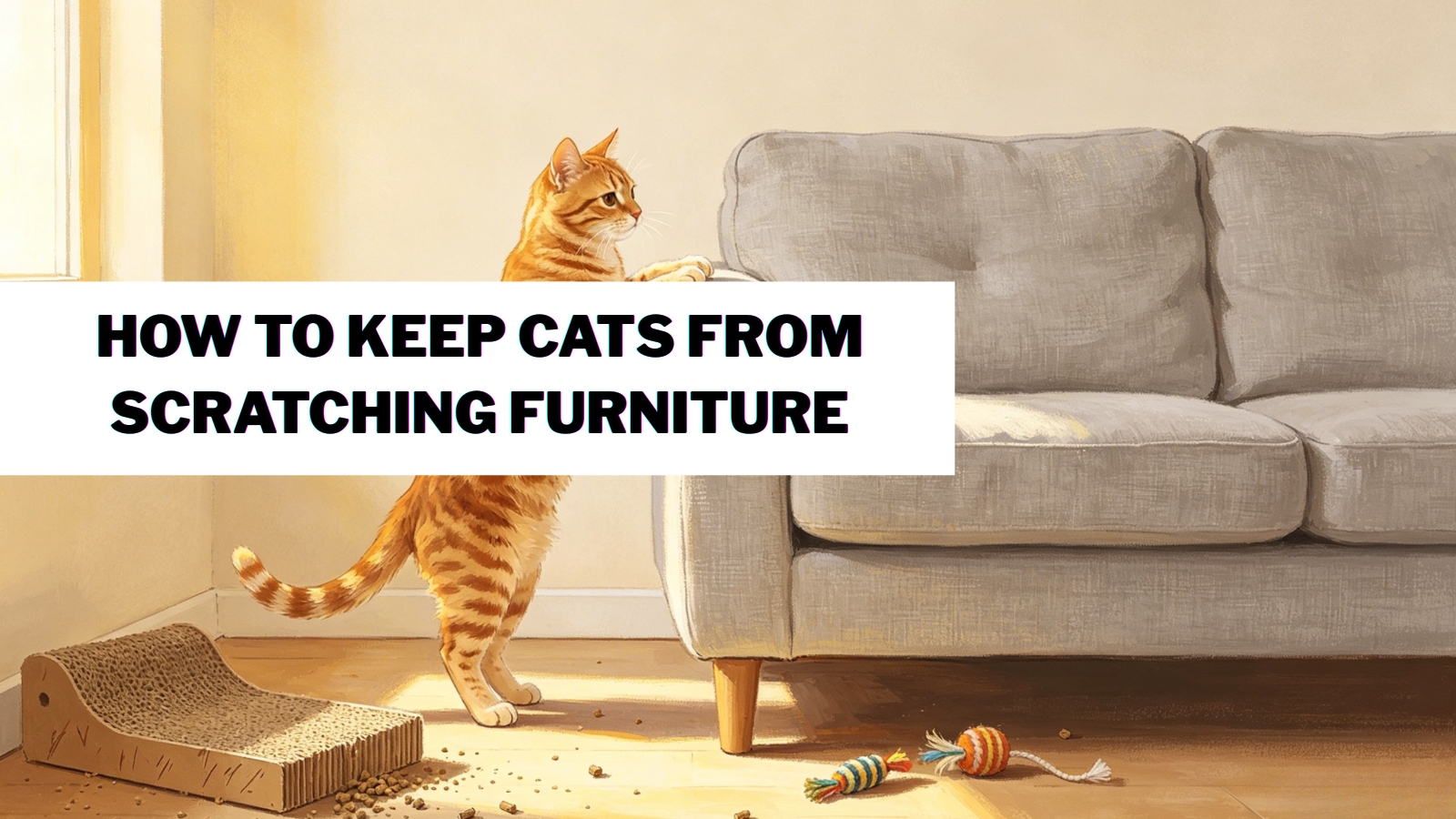
There is hardly anything more disheartening for a cat owner than to come home and see new scratch marks on a good sofa or dining chair.
It can be an expensive and let-down of a situation, but the truth is, scratching is as normal as it is essential for your cat.
They aren’t doing it to be difficult or out of some kind of malice. For a cat, it’s a way to stay in good physical and emotional shape.
So if you want to put an end to the furniture damage, you have to start by getting inside your cat’s head. You won’t get far with scolding or punishment; since this is all instinct, you can’t really train a cat not to do it.
Fortunately, you don’t have to stop the behavior. What you can do is steer it in a different direction and make your furniture a bit less of a draw.
Put in some well-chosen posts, use a little strategy, and you can have a happy cat and a safe home at the same time.
Meet&Co’ll be covering the why and how of it all here, from better habits to the best ways to let your cat be a cat without the collateral damage.
Key Takeaways
- Scratching is what cats do to keep their claws in order, work out their muscles, and put in a claim on their space.
- The best defense is to put out something they like even more than your couch.
- Put a post where they are already making a mess, and you will see a difference.
- Stick with positive training and a setup that works for them, and you will have a lasting solution.
Why Cats Scratch Furniture in the First Place
Some owners see a cat at the arm of a chair and think of it as a bad habit to be put down. In fact, there are very good reasons for it.
Claw Care
Cats need to file down the outer sheath of their nails as they grow. A good scratch does the job. If you don’t give them a proper place to do it, they will find one on your carpet or upholstery.
A Good Stretch
It’s also a form of exercise. A cat will put up against a surface and work the whole body—shoulders, back, paws. It’s especially common after they’ve had a lie-down.
Putting in a Marker
Scratching is a way of saying “this is mine.” The marks you see are for other animals to notice, and the glands in their paws leave a scent you can’t see. It makes them feel at ease in their surroundings.
Letting Off Steam
Sometimes it’s about emotion. An overstimulated or even a little anxious cat may put in a few extra scratches to handle a change in the room or just to feel secure.
Since it covers so many bases, the plan is to redirect rather than halt it.
How to Keep Cats From Scratching Furniture by Providing Better Alternatives
You can’t make a cat not scratch, but you can give them a spot they prefer.
The Right Post
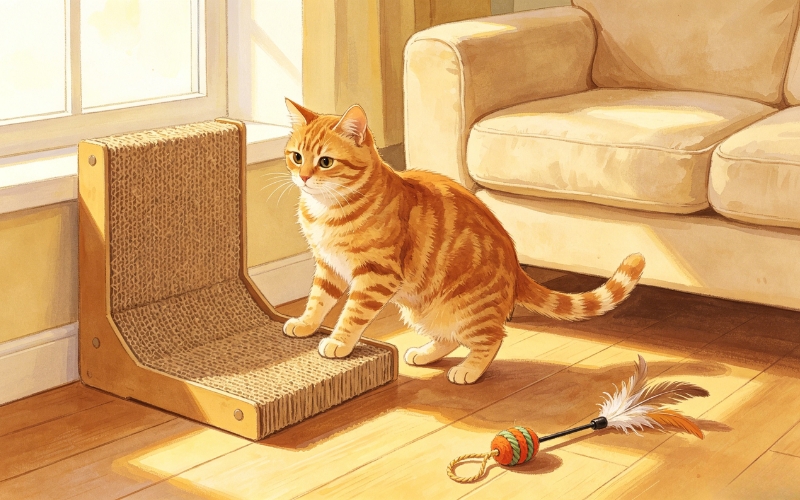
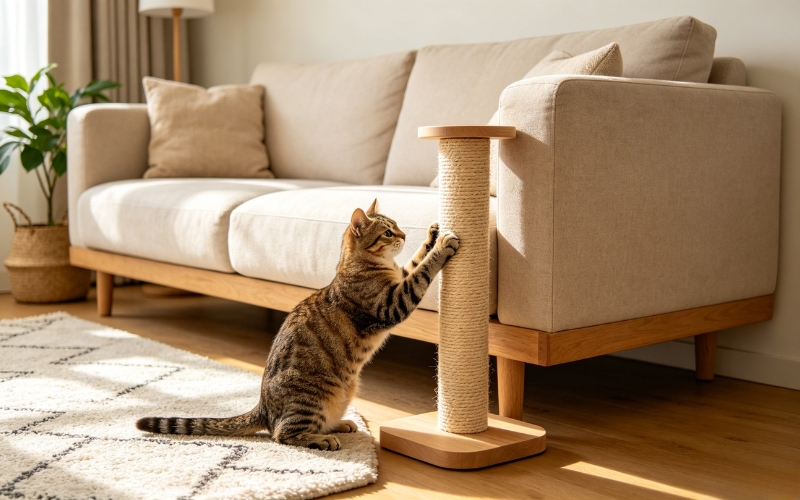
Some like to go up a tall, vertical post; others like a flat one on the ground. And it has to be solid. A wobbly post is no use to a cat.
Try a Few Things
Sisal is the standard, but some have a taste for cardboard or raw wood. If a post is being left alone, it might be the texture and not where you put it.
Go With What They Like
Watch what they are already doing. If they are after the corner of a table, a tall post is in order. For rug-scratchers, a horizontal pad is the way to go.
Have a Few Around
In a big house, one isn’t going to cut it. Have a few stations put in and you’re more likely to see them used.
Placement Matters: Where to Put Scratching Posts for Maximum Success
Location is everything. A fine post in a corner of the room where no one goes is a waste of space.
Right Next to the Trouble
The easiest thing to do is to put a post up by the piece of furniture they have been using. If they are on the armrest or a chair, put the post there. It’s a simple swap that doesn’t require you to force the issue.
Close to Where They Sleep
Cats like to put on a good show of stretching as soon as they’re up and about, and that means some scratching is bound to happen.
You’ll have better luck with a post if you put it right by the bed, a cat tree, or wherever your feline makes their home for the day.
By the Window
Your cat will be more inclined to use a post in the places they like to keep an eye on what’s going on.
A spot in the hallway, in front of a window, or in the middle of family life is often a hit. It lets them do a bit of territory checking while they get in some good scratches.
Don’t Tuck It Away
It’s easy to want to put a post in an empty corner or a spare room for the sake of tidiness, but don’t. If it’s not in the way of your cat’s usual comings and goings, they won’t see the point of it.
Furniture Protection Strategies That Actually Work
You can put some safeguards in place while you’re in the process of training. The idea is to make the furniture less of a draw until new habits are formed.
Covers and Throws
A thick throw or cover is an easy way to put a buffer between your cat and the sofa, especially if it’s already been put through its paces. They’re a stopgap, but they can save a piece of furniture in the short term.
Clear Guards
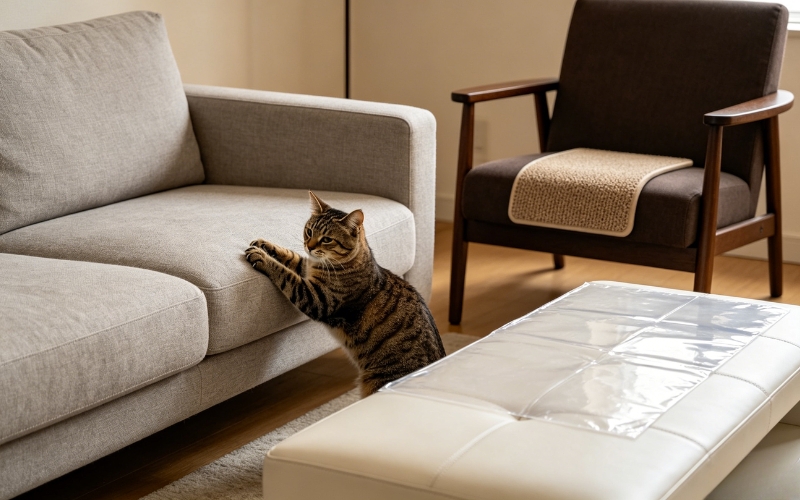
For a physical barrier that doesn’t look out of place, there are transparent scratch and corner protectors. A lot of people like these because they do their job without being in your face.
Double-Sided Tape
Most cats have no love for the feeling of sticky tape on their paws.
Put some on the spots they always go for, and you’ll put a damper on the habit. Just be sure to use something made for furniture so you don’t ruin the finish.
Deterrent Sprays
There are some cat-safe sprays on the market that can put the kibosh on a cat’s interest in a certain chair. They work best when you’re also offering up a better option, and you should follow the label.
Training Techniques to Stop Furniture Scratching
Make It Worth Their While
When you see them using the post, give them some attention, a treat, or a bit of play. That kind of positive reinforcement will make the post the place to be.
Be a Redirector
If you walk in on them in the act, just calmly point them to the post. Yelling or punishment only confuses a cat and erodes trust.
Add Some Catnip
A dusting of catnip or silvervine on the post can make it more of a magnet. It’s a good way to get them to try it out.
Don’t Waver
Everyone in the house has to be on the same page. Cats are creatures of habit; if you’re consistent, you’ll see it pay off down the line.
Common Mistakes Cat Owners Make
Some owners have all the right gear and still end up with ruined upholstery. Here is why:
Buying a Small or Unstable Scratching Post
- The post is a wobbly one. If it’s too small or it moves when they put some weight on it, they’ll go back to the couch.
Placing Posts in Unused Areas
- It’s in a room no one uses. Accessibility is key.
Punishing the Cat
- You’re being hard on them. Hissing or spraying water with a bottle doesn’t fix anything; it just makes for a stressed-out cat.
Removing All Scratching Opportunities
- You’ve left them with nothing to scratch. It’s in their nature. If you don’t provide an outlet, they’ll find one.
Expecting Immediate Results
- You want it to happen overnight. Some cats are quick to learn; others take a few weeks. Be patient.
How to Protect Different Types of Furniture From Cat Scratching
One size doesn’t fit all when it comes to furniture. Here’s how to handle the usual suspects.
Sofas and Sectionals
They’re big, and in the way, so they’re prime targets. Put up some covers or clear guards on the armrests and corners, and put a post right next to them for an easy switch.
Dining Chairs
The shape of a chair and its exposed corners can be tempting. A cover or wrap can help, but you’ll need to be on top of any old habits.
Wooden Furniture
Tables and shelves with a bit of texture can be alluring. A protective film can stave off some of the marks, and a post with a similar feel might take the edge off.
Fabric Upholstery
There’s a lot of give in fabric for a cat’s claws. Use some tape or a protector to make it less of an option.
Leather Furniture
Once a leather chair is scratched, it’s hard to put right. A cover or guard is a must-have here to keep your cat from making a mess of it.
When Scratching May Signal a Bigger Problem
It’s no secret that cats like to scratch. But if you notice a sudden shift in how much or why they do it, there could be something else going on.
When the scratching seems out of hand or is part of a larger change in your cat’s demeanor, it’s a good idea to take a closer look at what’s been happening with them.
Stress and a Changing Environment
Cats don’t like to be upstaged by new circumstances. A move, a new pet in the house, or even a disruption to their daily routine can put them on edge.
More scratching is often their way of dealing with that kind of uncertainty.
Not Enough to Do
When a cat is bored, they’ll make their own fun. Without enough toys, places to climb, or some mental engagement, they have to let off steam somehow, and scratching is an easy outlet for that extra energy.
More Than One Cat in the House
If you have a multi-cat home, scratching can become a way to stake a claim. Tensions between felines or a bit of competition over space can lead to more of this kind of behavior around the house.
When to Consult a Veterinarian or Behaviorist
Should the scratching get out of control or become destructive, a vet or an animal behaviorist can be of service.
They can help you sort out whether you’re looking at a medical problem, a stressor, or an environmental trigger.
Conclusion
You can’t (and shouldn’t) put a stop to a cat’s need to scratch. The trick is to steer it in the right direction.
If you want to keep the furniture intact without being heavy-handed, you have to put in the work: the right posts, some smart placement, and a little training.
It’s not an overnight fix. Some cats will catch on in a day; others will need you to be patient and repeat yourself until the new habit sticks.
Also see:
FAQs
How Do I Stop My Cat From Scratching My Couch?
Put a post right where the couch is, put some protectors on the upholstery, and be sure to show some appreciation when they go for the post instead.
What Is the Best Scratching Post for Cats?
It comes down to what your cat likes. In general, they want something solid they can really put their back into, with a good covering of sisal or cardboard.
Do Cats Stop Scratching Furniture as They Get Older?
For the most part, no. It’s in their nature. An older cat might not be as hard on things, but the urge is still there.
Does Catnip Help Prevent Furniture Scratching?
It can be. It makes a post or pad more of a draw than the sofa, especially if you pair it with a bit of training.
Are Furniture Protectors Effective Against Cat Scratches?
They do. Whether it’s a panel or a guard, they can cut down on the wear and tear while you nudge your cat toward better options.
Why Does My Cat Ignore Its Scratching Post?
Maybe it wobbles, or the material isn’t to its taste, or it’s in a spot the cat doesn’t like. Switch it up and you may see a difference.
Is It Okay to Trim a Cat’s Claws?
Sure, and it can save your furniture. Just do it right. If you don’t feel confident, have your vet or groomer show you.
Can Stress Cause Excessive Scratching Behavior?
Absolutely. Anxiety, a change in the household, or running in with another pet can all have a cat lashing out at a piece of wood to make themselves feel better.


