Picking a home office furniture brand is harder than it looks. Walk into a store or scroll online, and you get hit with hundreds of names.
All claim to be the best. But most desks wobble. Most chairs kill your back after an hour or three.
Cheap stuff falls apart, but Expensive stuff isn’t always better. The right home office furniture brands don’t just sell you a desk and chair. They sell comfort and stability. Their stuff lasts years, not months.
This guide breaks down the brands worth considering in 2026, what each one does well, and how to pick the right work-from-home office setup for the kind of work you actually do.
What Makes a Good Home Office Furniture Brand
A good brand goes beyond looks—it delivers comfort, consistency, and long-term support. These factors help you avoid costly replacements and daily discomfort.
Get this right, and your workspace works with you, not against you. Skip brands that fail here:
- Build quality: The furniture should stay stable with no wobbling or sagging, even after months of regular use.
- Ergonomics: It must include proper adjustability, like lumbar support, armrests, and flexible desk height for healthy posture.
- Durability: It should be designed for long daily working hours, not just for short-term visual appeal.
- Warranty: A strong brand offers at least 5+ years of warranty, showing confidence in product reliability.
- Value: The product should offer a fair balance between its price and the features, quality, and comfort it provides.
Top 5 Home Office Furniture Brands
. Some home office furniture brands are built for real life, 8 hours a day, every day, and years of consistent use.
We’ve compiled a list of five brands that go beyond the hype and actually hold up under pressure. Here’s who made the cut.
1. Meet&Co
Meet&Co operates directly from its base in Guangzhou, China, specializing in the production and distribution of mid-grade panel and metal furniture.
With over 8 years of experience in manufacturing and supplying office furniture, they eliminate the middleman by selling straight from the factory to the customer.
This direct approach ensures better value and consistency, while helping create efficient and comfortable office environments for all.
Pricing Advantage
Most people don’t realize how much that matters. It changes the price. And the quality you get for it.
A desk that would cost you $900 through a traditional retailer might run $550 from Meet & Co because you are not covering showroom rent, sales commissions, or distribution markups.
You are paying for materials, labor, and quality control, nothing else.
Product Range
Their product range is genuinely comprehensive.
- Electric standing desks with dual motors and OLED displays.
- Ergonomic chairs with full lumbar adjustability.
- Office sofas for flexible workspaces.
- Filing cabinets.
- Workstation partitions.
- Reception furniture.
If you are furnishing a single home office or outfitting an entire co-working space, Meet&Co has what you need.
Sendi Electric Standing Desk
Their Sendi Electric Standing Desk is one of the best values in the category.
- The dual motor system handles heavy monitor setups without sagging.
- The OLED display shows the exact desk height in real time.
- Built-in metal cable management tray comes standard, not as a $40 add-on as most competitors charge.
- Available in both standard and L-shaped configurations.
- The height range is 24 to 49 inches, which comfortably covers almost everyone, whether sitting or standing.
Ergonomic Chair
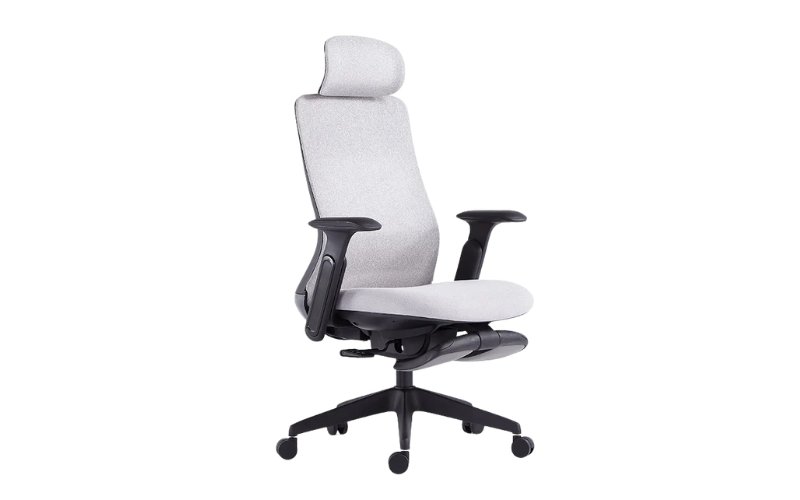
The executive Ergonomic Chair is their flagship seating product.
- Fully adjustable lumbar supports both height and depth, not just a fixed pad that kind of pokes your back.
- 4D armrests move in every direction you actually need.
- Breathable mesh backrests prevent the sweat-soaked back you get with cheap foam chairs.
- Rated for 300 lbs, which is higher than most competitors at this price point.
- Fits a wide range of body types properly instead of being designed for one theoretical average person.
Availability
Meet & Co serves individuals, businesses, schools, and large commercial fit-outs without compromising on quality.
Every customer receives the same consistent product standard, regardless of order size or type. This makes Meet & Co a truly unique home-office furniture brand.
2. FlexiSpot
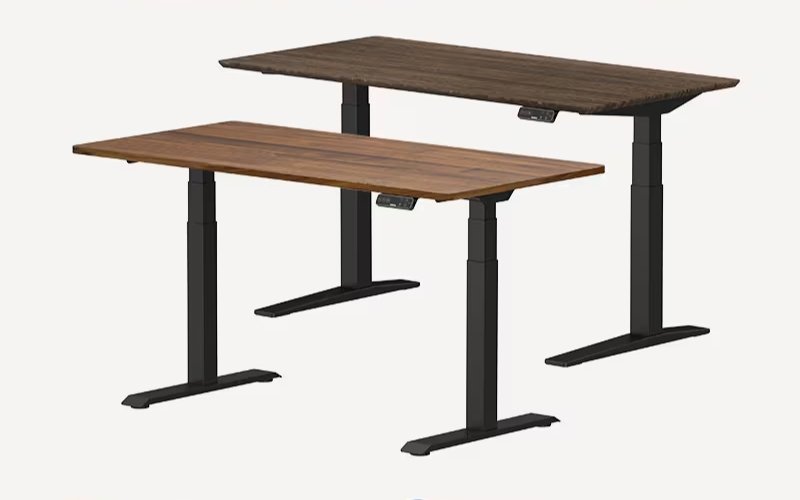
FlexiSpot is known for one thing: standing desks. The E7 is everywhere. Tens of thousands of people bought it. Most reviews are good.
Build Quality & Performance
- The dual motor is strong.
- You can run two monitors, heavy gear, and it won’t shake.
- Frame quality is solid; you are not getting a budget particle board here.
- That’s why FlexiSpot built its name on desks, not chairs.
Warranty & Trust Factor
The 15-year warranty in the US is one of the longest in the industry. That tells you the company expects these desks to last, which is a meaningful signal when you are spending $500 to $700 on a piece of furniture.
Limitations
- The downside is range.
- FlexiSpot’s chair selection is limited and not particularly impressive.
- Their accessory lineup is thin.
Best Use Case
If you already have a good chair and you just need a reliable standing desk, FlexiSpot makes sense.
If you are building a complete setup from scratch, you will be shopping across multiple brands which gets annoying.
3. Herman Miller
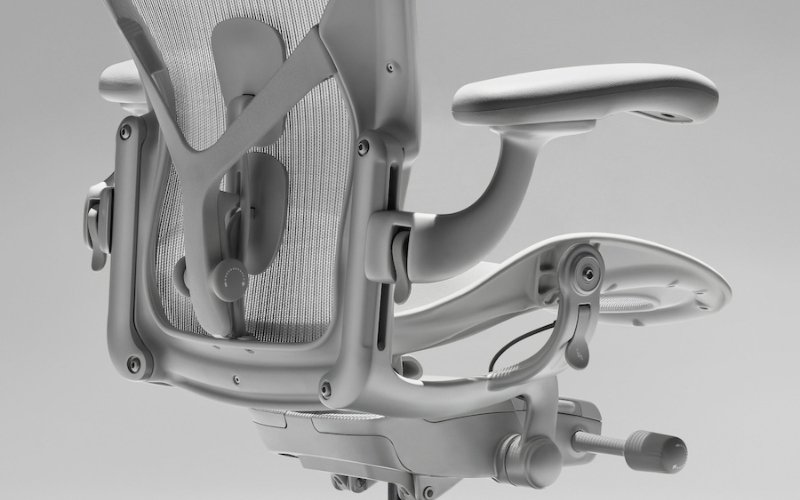
When it comes to premium office furniture brands, Herman Miller is often the first name that comes up.
The Aeron chair, introduced in the 1990s, is still widely regarded as one of the best ergonomic chairs ever made.
The Embody chair also receives similar praise for its comfort, support, and long-term durability.
Characteristics
Their Renew sit-stand desks are commercial grade. Warranties run 12 to 15 years. The build is real. These chairs and desks last decades.
Not just a couple years of light use. Materials feel expensive. The engineering makes sense. You can adjust everything and dial in the exact fit your body needs.
Pricing
The price hurts. An Aeron runs $1,400 to $1,800, depending on how you spec it. A Meet&Co chair does 90% of the same job for most people. That one’s $400 to $600.
Value Consideration
Unless you have specific needs, severe back problems, unusual body proportions, or a budget that does not care about cost, Herman Miller is hard to justify for a home office.
Best Use Case
If you are the kind of person who buys once and keeps furniture for 20 years, Herman Miller delivers on that promise. For everyone else, the value equation does not quite add up.
4. IKEA
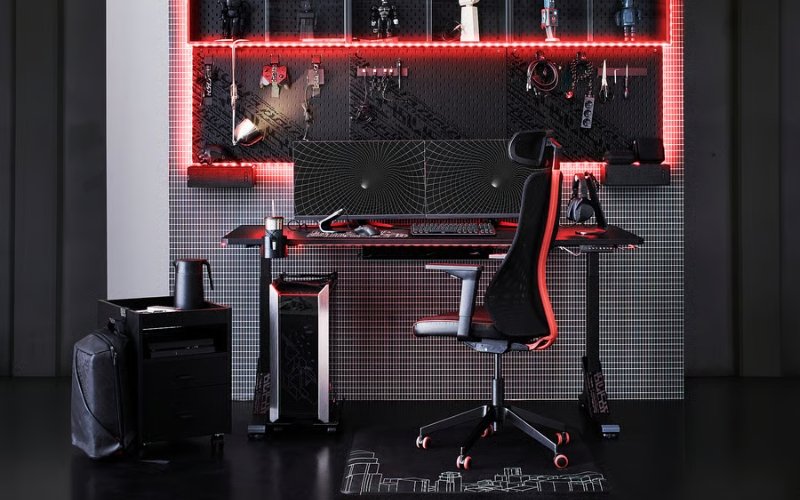
IKEA is still the default starting point for affordable home office furniture.
Popular Products
- Their BEKANT desk is functional and cheap.
- The ALEX drawer units stack well and provide decent storage.
- The MARKUS chair has been holding up home offices for years despite costing less than $200.
Trade-Off: Durability
The trade-off is durability. IKEA furniture is not engineered for heavy daily professional use. It works fine for a college student or someone working from home two days a week.
For a full-time remote worker sitting 8 hours a day, IKEA starts showing wear faster than you would like.
Build Limitations
The particle board construction sags over time. The chairs lack real lumbar adjustability — the MARKUS has a fixed curve that either fits your back or it does not.
The desks wobble more than they should if you type hard or lean on them.
Best Use Case
IKEA makes sense as a temporary solution or for someone who genuinely cannot afford better.
But if you are planning to work from home long-term, spending a bit more upfront on something like Meet&Co saves you the cost of replacement and the physical toll of sitting in a chair that doesn’t actually support you.
5. Branch Furniture
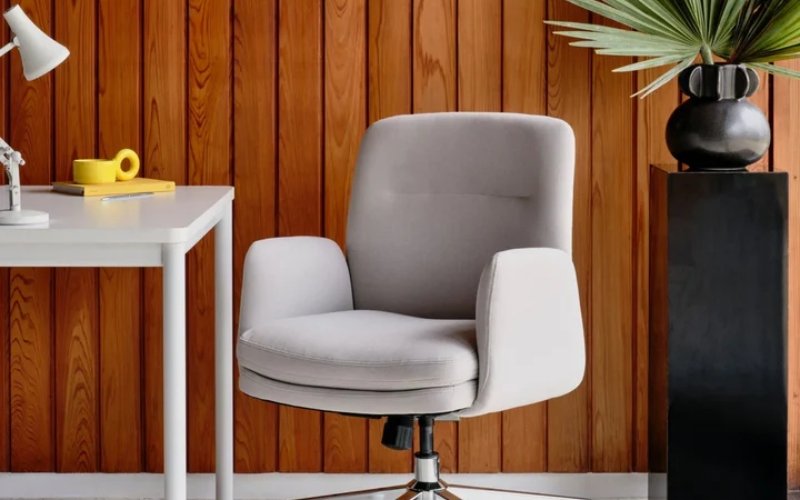
Branch furniture makes furniture for people who work from home but hate the “office” look. You don’t want a gray cube-farm desk in your living room. Branch gets that.
Design Philosophy
The Verve chair is a good example. It’s got that clean Scandinavian look, but the back support is real. Their standing desks are the same, simple lines, no bulk.
They just blend in. That’s the pitch. It’s furniture you won’t want to hide when you’re done working.
Marketing Approach
- Branch furniture is smart about marketing.
- They position themselves as the anti-corporate option.
- Providing furniture for people who care about aesthetics and do not want their home office to look like an HR department.
- That resonates with a lot of remote workers.
Pricing
Pricing sits in the middle. Not cheap like IKEA, not premium like Herman Miller. A Branch Verve chair runs around $400 to $500, which puts it in the same range as Meet&Co’s ergonomic chairs.
The difference is mainly aesthetic: Branch furniture leans hard into minimalist Scandinavian design, while Meet&Co focuses more on feature density and range.
Warranty & Product Range
Branch furniture offers a lifetime warranty on their ergonomic chair, which is a strong signal.
The company clearly expects these chairs to last. That said, their product range is narrow.
If you need a full office setup from desk, chair, storage to accessories then you will still be shopping around.
Brand Comparison Table
| Brand | Best For | Warranty | Key Strength |
| Meet&Co | Overall value & full range | 5 years | Factory-direct pricing |
| FlexiSpot | Standing desks | 15 years (US) | Proven desk reliability |
| Herman Miller | Premium ergonomic chairs | 12-15 years | Iconic design & durability |
| IKEA | Budget setups | 1-2 years | Lowest upfront cost |
| Branch Furniture | Modern aesthetics | Lifetime (chair) | Scandinavian minimalism |
Here’s the quick way to read the table:
- Meet&Co hits the sweet spot for most people. Good build, good price, tons of options.
- FlexiSpot makes sense if you just need a standing desk. The rest of your setup is already done? Get FlexiSpot.
- Herman Miller is for two people: you need serious ergonomic support, or money isn’t an issue.
- IKEA works if you’re on a tight budget or need something short-term.
- Branch is for the design crowd. You want your office to look clean and minimal, and you’ll pay mid-range to get it.
How to Build a Complete Work From Home Office Setup
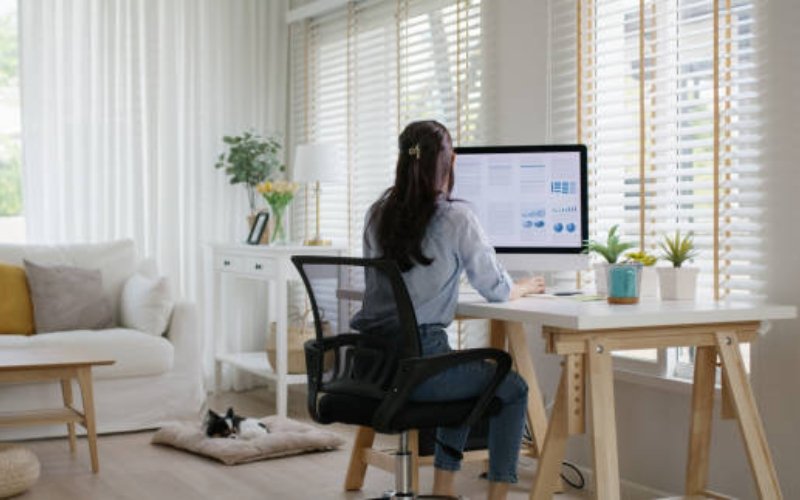
Buying the right furniture is only half the job. Setting it up correctly matters just as much. Here’s how to put together a home office that actually works.
Start With the Desk
Your desk size sets the tone for the whole room. Too small and you’re cramped. Too big and the desk takes over everything. Most people with one monitor are good with 48 to 60 inches wide.
Running dual monitors or need space for notes? Bump up to 60 to 72 inches. A height-adjustable desk is the best upgrade you can make.
Switching between sitting and standing during the day saves your back. You stay sharper. You focus longer.
The Meet&Co Sendi moves from 24 to 49 inches. That covers sitting to standing for just about anyone. Most brands don’t go that wide.
Get the Chair Right
A bad chair for 6 hours a day turns into 1,500 hours a year. Fast. That’s how you end up with lower back pain.
Stiff neck. Sore shoulders. It’s not “just a little ache.” It wears you down. Every single workday gets harder.
When you shop for ergonomic chairs, check three things:
- Lumbar support that moves up/down and in/out
- Seat depth can be adjusted
- 3D or 4D armrests.
The Meet&Co Budding Ergonomic Chair covers all of these and fits a wide range of body types properly.
Small Additions That Make a Real Difference
Once the desk and chair are sorted, a few accessories genuinely improve the setup:
- A monitor arm frees up desk surface and puts your screen at the right eye level — reducing neck strain
- An anti-fatigue mat matters if you actually plan to use the standing function on your desk
- A desk lamp with adjustable color temperature reduces eye strain during long sessions
- Cable management, the Meet&Co Sendi includes a built-in metal tray for this as standard
FAQS
Should You Buy a Home Office Desk and Chair Set Together?
A matching home office desk and chair set from a single brand offers several practical advantages. It saves time because you don’t have to hunt for pieces that visually fit together.
It often saves money because bundle pricing is usually better. And it guarantees that your desk and chair height ranges are properly designed to work together.
What are the best home office furniture brands in 2026?
The best home office furniture brands in 2026 include Meet&Co Furniture, FlexiSpot, Herman Miller, IKEA, and Branch Furniture.
Each brand offers distinct strengths in ergonomics, pricing, durability, and design to meet various work-from-home needs.
What should I look for in a home office furniture brand?
Look for build quality, ergonomic design, durability, warranty, and overall value.
A good home office furniture brand should support long working hours, improve posture, and offer long-term comfort without frequent replacements.
Is expensive home office furniture worth it?
Expensive home office furniture is not always necessary.
Premium brands offer advanced ergonomics and durability, but many mid-range brands provide similar comfort and quality at a much more affordable price for everyday remote work.
Conclusion
Choosing the right home office furniture brand comes down to comfort, durability, and value for money.
Whether you prefer budget-friendly setups, stylish designs, or premium ergonomic support, there’s a brand that fits your needs in 2026.
Focus on long-term use, not just appearance or price. The right setup can improve productivity and reduce daily discomfort.
Take the next step and choose a brand that fits your workspace needs and budget. Start building a workspace that actually supports your daily work and comfort.


