
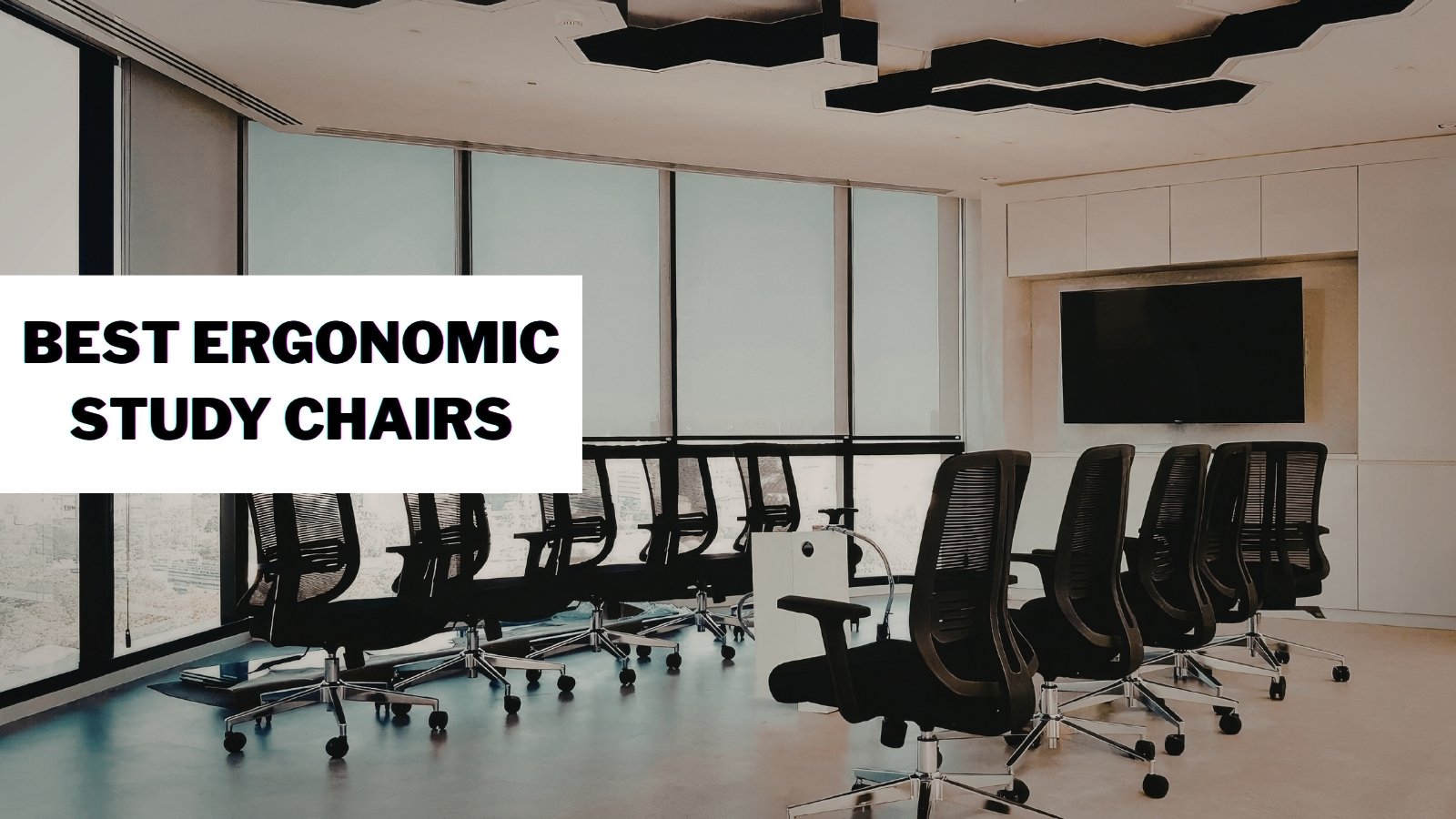
Most students and remote workers do not think about their chairs until their backs start hurting.
By that time, they may have been sitting in a chair that does not properly support their body for months, and the strain on their posture and focus has already begun.
The interesting thing about ergonomic study chairs is that the right one does more than improve comfort.
It directly affects how long you can stay focused before discomfort distracts you from your work or studies.
Back pain during long study sessions is one of the most common complaints among students and remote workers.
The chair you are sitting on right now is probably contributing to that in ways you have not yet connected.
Here is a practical breakdown of the best ergonomic study chairs available right now and what makes each one worth considering.

What Makes a Study Chair Actually Ergonomic
Before getting into specific chairs, it helps to understand what separates a genuinely ergonomic chair from one that just looks like it belongs in a professional office.
The features that actually matter for long study sessions are:
- Lumbar support that follows the natural curve of your lower spine rather than pushing against a flat back
- Seat depth adjustment so the chair fits your leg length rather than cutting off circulation behind your knees
- Armrest height and width that allow your shoulders to stay relaxed, rather than hunching upward
- Breathable backrest material that prevents heat buildup during sessions lasting several hours
- Seat height range that positions your feet flat on the floor with your hips at a neutral angle
A chair missing even two or three of these features will start creating problems after 45 minutes of continuous sitting, regardless of how good the cushioning feels initially.
Best Ergonomic Study Chairs Worth Buying Right Now
The market for ergonomic seating has expanded considerably over the past few years.
These are the options that consistently deliver on the features that matter most for students and long-session users.
1. Meet&Co Full Mesh Ergonomic Chair
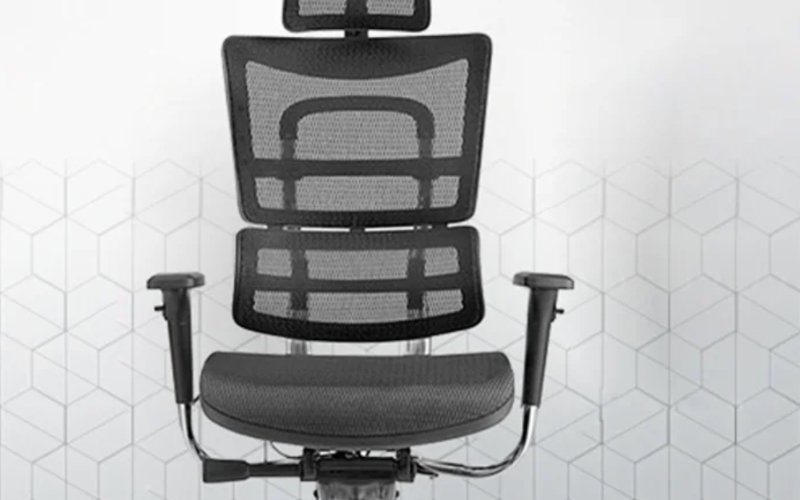
The Meet&Co Full Mesh Ergonomic Chair is the kind of chair that addresses the most common complaint about budget ergonomic seating: the back support feels adequate for the first hour, then disappears entirely.
The mesh construction on this chair does two things simultaneously. It provides continuous airflow across your entire back so heat does not build up during long sessions.
It also distributes pressure across a wider surface area than foam-backed chairs do, which is why it holds up better during three and four-hour study blocks.
What the Meet&Co Full Mesh delivers:
- Completemesh back construction for consistent airflow and pressure distribution
- Adjustable lumbar support that positions against your lower spine specifically
- Seat height, armrest height, and backrest tilt are all independently adjustable
- Durable frame construction rated for commercial use environments
- Clean professional aesthetic that works in home office and study setups
Pros
- Full mesh design improves airflow
- Strong lumbar support for long sessions
- Multiple adjustable settings
- Durable commercial-grade build
- Good value for money
- Suitable for long study hours
Cons
- Limited premium aesthetic options
- No headrest included
- May feel too firm for some users
The adjustability range of this chair makes it genuinely useful for different body types. You are not locked into one manufacturer’s assumption about average proportions. You set it to fit how your body actually sits.
2. Branch Verve Chair
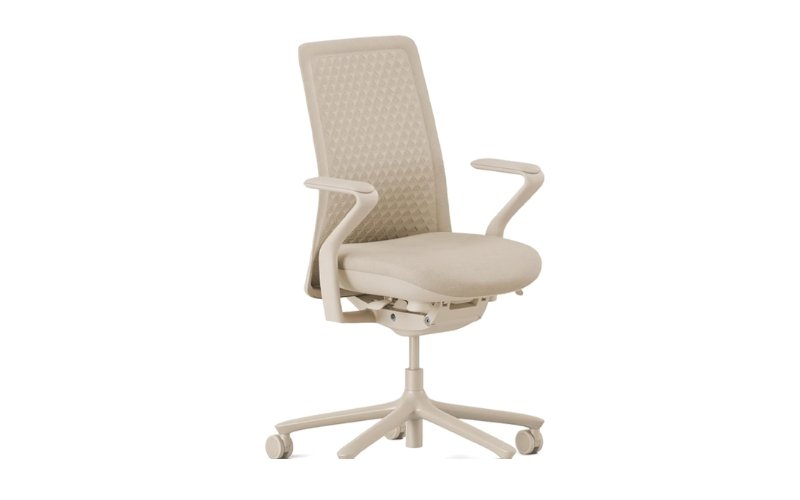
The Branch Verve Chair sits at the higher end of the study chair market, and the price reflects a level of engineering that cheaper options skip entirely.
The peculiar thing about the Verve is how it handles the transition between upright focused work and the slightly reclined position most people drift into after an hour of concentration.
Most chairs lose their lumbar support the moment you lean back.
The Verve maintains contact with your lower spine through the full range of recline, which is a more difficult mechanical problem than it sounds.
Branch Verve Chair key features:
- An adaptive lumbar that maintains contact through recline positions
- Seat depth adjustment accommodating leg lengths from short to tall
- 4D armrests adjust height, width, depth, and angle independently
- Weight capacity of 300 pounds with reinforced base construction
- Available in multiple upholstery options, including performance fabric
Pros
- Adaptive lumbar support
- Premium build quality
- 4D adjustable armrests
- Seat depth adjustment
- Comfortable recline support
- High weight capacity
Cons
- Higher price point
- Assembly required
- May be too advanced for casual users
The 4D armrest adjustment is worth highlighting specifically. Most chairs offer height adjustment only.
The Verve lets you move armrests inward for narrow shoulders, forward for typing positions, and angle them to match your natural wrist position.
That level of customization removes one of the most common sources of shoulder and neck tension during long sessions.
3. Branch Ergonomic Chair Pro
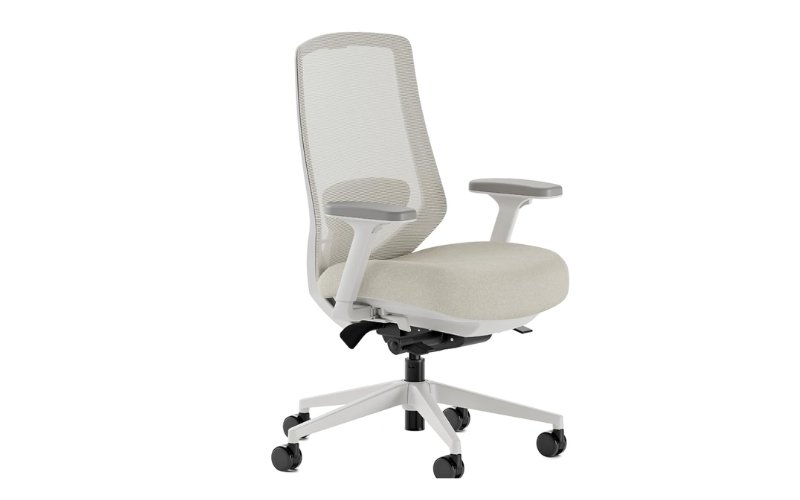
The Branch Ergonomic Chair Pro sits between the Verve and entry-level ergonomic options in both price and feature set.
It is aimed specifically at people who want genuine adjustability without paying for every premium feature the Verve offers.
The Pro version added several improvements over the original Branch chair, making it significantly more suitable for extended study sessions.
Branch Ergonomic Chair Pro breakdown:
- Adjustable lumbar support with both height and depth control, rather than a fixed position
- Seat slide mechanism allowing 2 inches of forward and backward seat depth adjustment
- Recline tension control lets you set resistance to match your body weight
- Headrest included supporting neck position during reading and screen viewing
- Armrests adjust in height and pivot angle for different desk configurations
Pros
- Adjustable lumbar support
- Seat depth adjustment
- Recline tension control
- Includes headrest
- Good balance of price and features
- Comfortable for long sessions
Cons
- Not as premium as Verve
- Limited color options
- Slightly bulky design
The headrest inclusion is relevant for study use specifically.
Reading on screens for extended periods creates neck strain that a well-positioned headrest significantly reduces.
Most chairs in this price range leave headrest support as an expensive add-on.
4. Steelcase Gesture Ergonomic Chair
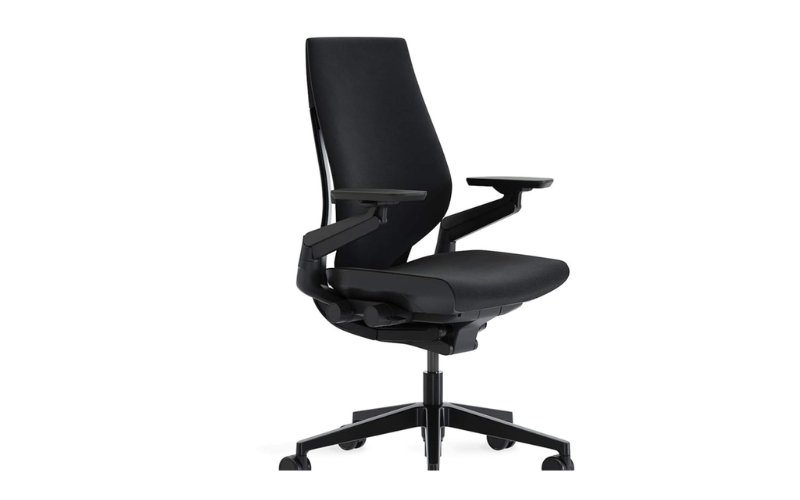
The Steelcase Gesture Ergonomic Chair is designed for users who spend long hours sitting and frequently switch between different work positions.
Unlike traditional office chairs, the Gesture was built around how people actually sit today, especially when using multiple devices such as laptops, tablets, and smartphones.
Steelcase conducted global posture studies observing thousands of users before designing this chair, which led to its highly adaptable ergonomic system.
One of the standout features of the Steelcase Gesture is its 360-degree adjustable armrests.
These armrests move similarly to human arms, allowing users to find comfortable support whether typing, reclining, or using mobile devices.
This helps reduce strain on shoulders, wrists, and neck during long working sessions.
The chair also features Steelcase’s 3D LiveBack technology, which adjusts with your spine’s natural movement.
This ensures continuous support as you lean forward, recline, or shift positions throughout the day.
The synchronized seat and back movement also helps maintain proper posture and reduce fatigue.
Key Features
- 360-degree adjustable armrests
- 3D LiveBack spinal support
- Adjustable seat depth
- Recline tension control
- 400 lbs weight capacity
- 12-year warranty
Pros
- Excellent ergonomic support
- Highly adjustable armrests
- Premium build quality
- Long warranty
- Suitable for long sitting sessions
Cons
- Expensive
- Heavy design
- Limited breathable mesh options
5. Haworth Breck Office Chair
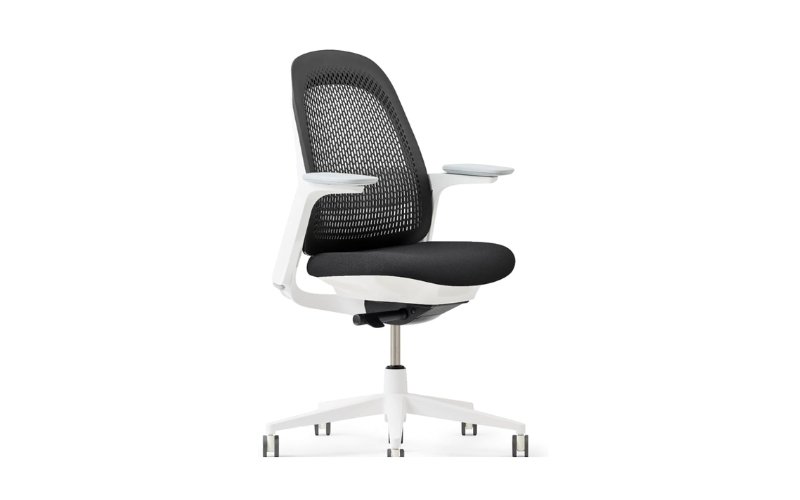
The Haworth Breck Office Chair is designed to deliver ergonomic comfort at a mid-range price point.
It combines modern design with practical ergonomic features, making it suitable for both home offices and study environments.
The chair focuses on flexibility, comfort, and adaptability for users who spend long hours at a desk.
One of the key features of the Haworth Breck is its GeoStretch backrest system.
This flexible back design adapts to your body movements and provides support across multiple pressure points.
The design also allows airflow through the backrest, helping maintain comfort during long sessions.
The Breck also includes a weight-activated recline mechanism. This feature automatically adjusts resistance based on your body weight, allowing smooth reclining without complicated manual controls.
Users can also lock the chair in three different recline positions for additional support.
Key Features
- GeoStretch flexible backrest
- Weight-activated recline
- Adjustable lumbar support
- Seat depth adjustment
- Lightweight design
- Sustainable materials
Pros
- Affordable ergonomic chair
- Good adjustability
- Breathable back design
- Lightweight and modern
- Easy assembly
Cons
- Armrests may feel slightly loose
- Not as premium as high-end chairs
- Limited advanced adjustments
6. Herman Miller Asari Chair
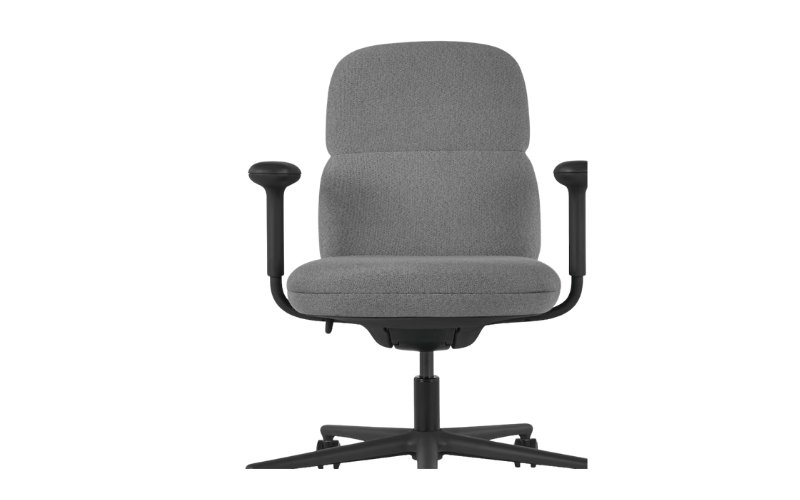
The Herman Miller Asari Chair is designed to combine ergonomic performance with premium comfort and elegant aesthetics.
Unlike traditional office chairs that focus heavily on adjustability, the Asari prioritizes comfort, clean design, and long-term usability. This makes it especially suitable for home offices and creative workspaces.
The Asari chair features Herman Miller’s PostureFit support system, which helps maintain the natural curve of the spine.
This ergonomic design reduces pressure on the lower back and promotes healthier posture during long working sessions.
Another standout feature is the chair’s plush cushioning and soft upholstery. The seat uses dual-density foam that provides comfort without feeling overly soft or sinking.
This makes it suitable for extended sitting periods while maintaining proper support.
Key Features
- PostureFit spinal support
- Premium upholstery
- Dual-density foam seat
- Adjustable height and tilt
- Aluminum base construction
- Premium aesthetic design
Pros
- Excellent comfort
- Premium build quality
- Stylish modern design
- Long-term durability
- Good lumbar support
Cons
- Expensive
- Limited adjustability
- Less breathable than mesh chairs
How to Choose Between These Options
The right chair depends on three things that most buying guides skip over entirely.
Your primary use case matters more than feature lists:
- If you study for 4 plus hours daily, adjustable mesh study chair and continuous lumbar contact during recline are the priorities
- If you share the chair with others of different body sizes, 4D arm rests, and a wide seat depth range matter most
- If the chair lives in a visible home space, design and upholstery quality become legitimate factors alongside function
Your budget range determines realistic expectations:
| Price Range | What You Realistically Get |
| Under $300 | Basic adjustability, adequate lumbar, and limited armrest control |
| $300 to $500 | Full adjustability suite, better materials, longer warranty |
| $500 and above | Premium materials, advanced lumbar systems, and design quality |
Your body proportions affect which adjustments actually matter:
Taller users need a wide seat depth range and a high maximum seat height.
Shorter users need a minimum seat height low enough for their feet to sit flat without a footrest.
Wider users need a seat width and armrest spread that accommodates their frame without pressure points.
Why the Chair Under You Right Now Is Probably the Problem
Most people running into focus and productivity problems during long study sessions attribute it entirely to distraction, sleep quality, or motivation.
The peculiar thing is that physical discomfort from a poorly fitted chair creates a low-level cognitive drain that reduces concentration without ever announcing itself as the cause.
You shift in your seat. You stand up and stretch more than you planned. You lose your place in the reading material because you were unconsciously adjusting your position. None of that registers as chair-related, but most of it is.
An ergonomic study chair from a manufacturer that actually engineers for long session use, like the options at Meet&Co Furniture, removes that variable from your study environment.
It is one of the more straightforward investments you can make in how productively you actually use the hours you set aside for focused work.
Conclusion
The best ergonomic study chair for students is the one correctly adjusted for your specific body proportions and your specific session lengths.
The Meet&Co Full adjustable mesh study chair Ergonomic Chair delivers consistent airflow and genuine lumbar support for long daily sessions at a price point that makes sense for students and home office users.
The Branch Verve and Branch Ergonomic Chair Pro serve users who want more advanced adjustment systems and are willing to invest accordingly.
The design-approved category covers people for whom the visual integration of the chair into their space is a legitimate part of the decision.
Each of these chairs is a step up from the standard desk chair most people settle for.
Sometimes the solution to better comfort and sharper focus is simpler than you think, it starts with the chair you sit in every day.


